
We want to live in a world in which all countries around the world act individually and collaboratively to reduce the risk of global catastrophes.
Global Shield exists to advocate with governments worldwide to enact policies to better understand, prevent, prepare for, and respond to global catastrophic risk. We are building an international organization to educate and persuade national and international policymakers to reduce global catastrophic risk (GCR). We believe an all-hazards policy approach to addressing GCR can ensure governments are managing global catastrophic risk more effectively.
We are the world’s first international advocacy organization devoted to all-hazard global catastrophic risk.
Our cofounders
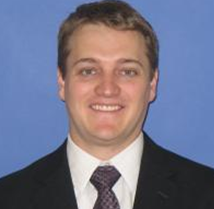
Jared Brown
Executive Director
Jared was previously the Director of U.S. and International Policy at the Future of Life Institute. At FLI, he focused on improving technology policy in the public and private sectors, particularly related to AI systems, to maximize the benefits of these technologies through the mitigation of their catastrophic risks. His work included active advocacy with U.S. and international policymakers and the provision of formal advice on draft and official policy. For example, Jared advised and advocated for better U.S. federal authorizations and funding for the safe and ethical research and development of emerging technologies, with multilateral government fora on the development of common guiding principles, with state legislatures on the procurement policies for artificial intelligence systems, with the European Union on the initial framing of the AI Act, and with industry on the creation and implementation of voluntary best practices.
He has also worked on a wide range of issues at the intersection of policy and the management of U.S. homeland and national security risks. In his capacity as an Analyst in Emergency Management and Homeland Security Policy at the U.S. Congressional Research Service, he confidentially advised the U.S. Congress on a range of critical policy topics, including the authorization and use of the Defense Production Act, the emergency response and grant programs of the Stafford Disaster Relief and Emergency Assistance Act, the National Emergencies Act, among other topics. He began his career working on homeland security and emergency management policy at the U.S. Department of Transportation, where he also served as a member of the Emergency Support Function response team for numerous crises as part of the National Response Framework. He holds a B.S. in Social Psychology and an M.P.P. with a special emphasis is humanitarian crisis management.
We want to live in a world in which all countries around the world act individually and collaboratively to reduce the risk of global catastrophes.
Global Shield exists to advocate with governments worldwide to enact policies to better understand, prevent, prepare for, and respond to global catastrophic risk. We are building an international organization to educate and persuade national and international policymakers to reduce global catastrophic risk (GCR). We believe an all-hazards policy approach to addressing GCR can ensure governments are managing global catastrophic risk more effectively.
We are the world’s first international advocacy organization devoted to all-hazard global catastrophic risk.
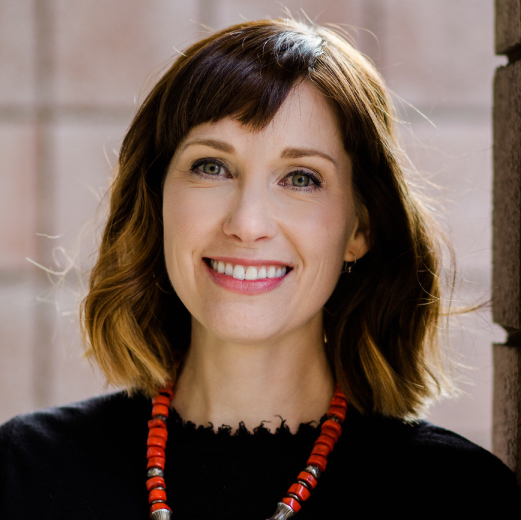
Ariel Conn
Director of Operations & External Affairs
Ariel previously founded Mag10 Consulting, which helps organizations communicate and advocate for science and technology. She led the IEEE-SA Research Group on Issues of Autonomy and AI for Defense Systems, where she worked with a group of experts to develop a more nuanced understanding of autonomous weapons technologies. She also cofounded TANGO Future.
Her work covers a range of issues, including global diversity issues, autonomous weapons systems, AI ethics and policy, nuclear weapons, climate change, and other global catastrophic risks. Via TANGO and her other consulting work, Ariel seeks to bridge the communications and knowledge gaps between technical experts, policy makers, industry, and the public. At TANGO and now with Global Shield, her focus is on bringing more underrepresented voices to these discussions, in order to more successfully and equitably address many of the world’s biggest risks.
She’s spoken about lethal autonomous weapons on multiple occasions at the United Nations, and she’s been an invited speaker to events around the world to discuss AI, autonomous weapons, climate change, and risks associated with technology. She was the original host of the FLI Podcast, as well as Not Cool: A Climate Podcast. Her work has been published in The Guardian, The Bulletin of Atomic Scientists, The Huffington Post, Metro UK, and more. She was formerly the Director of Communication and Outreach at the Future of Life Institute (FLI). She’s also previously worked with NASA, the Idaho National Laboratory, the National Energy Technology Laboratory, MIT, Virginia Tech, ALLFED, the Association for the Advancement of Artificial Intelligence, and the Global Challenges Foundation.
Ariel holds a B.A. in English, a B.S. in physics, and an M.S. in geophysics, and she has two decades of experience mixing advertising, marketing, and scientific research. In a previous career life, she worked for the ad agency Goodby, Silverstein & Partners where, among other things, she created a “got milk?” ad, and she was also the Managing Editor of Astrology.com.
We want to live in a world in which all countries around the world act individually and collaboratively to reduce the risk of global catastrophes.
Global Shield exists to advocate with governments worldwide to enact policies to better understand, prevent, prepare for, and respond to global catastrophic risk. We are building an international organization to educate and persuade national and international policymakers to reduce global catastrophic risk (GCR). We believe an all-hazards policy approach to addressing GCR can ensure governments are managing global catastrophic risk more effectively.
We are the world’s first international advocacy organization devoted to all-hazard global catastrophic risk.
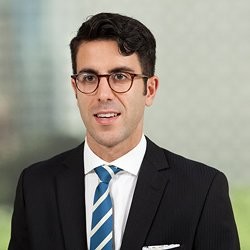
Rumtin Sepasspour
Director of Policy
Rumtin has had a successful 15-year career across policy, business and research. Most recently, Rumtin has been a researcher, adviser and public advocate for the ways governments can reduce existential and global catastrophic risk.
Since 2021, he has been leading pragmatic and pioneering research in the field of GCR policy as an independent researcher. This work has included research on how governments can better understand and govern risk and on all-hazard policy approaches to GCR. He has contributed to the development of the GCR field of studies, through a report on the state of policy engagement by the field and databases to support research and engagement on policy. His publications include an essay on how intelligence communities can help reduce existential risk, a book chapter on existential AI risk, and op-eds on Australian policy towards nuclear risk and national risk. He also founded Policy Foundry, a policy development unit in Australia focused on developing policy proposals for the Australian government to improve its approach to major strategic challenges of the 21st century.
Prior to this, Rumtin had a successful career in the Australian Public Service. He was a policy officer in the Department of the Prime Minister and Cabinet. He provided advice to the Prime Minister and his office on policy and engagement with countries in the Pacific and Southeast Asia. He provided advice on intelligence policy relating to the National Intelligence Community, including on improvising capability and coordination across the community. He was also an intelligence analyst in Australia’s Department of Defence, where he provided all-source intelligence assessments on matters relating to Australia’s national security and defense. He provided advice on long-term threats to regional security, defense spending of major powers, economic statecraft, and fragile states.
Before government, Rumtin worked in the private sector, in strategy consulting for Deloitte and retail banking in the Commonwealth Bank of Australia (CBA). He was deployed to Vietnam for two years to support CBA’s strategic partner, Vietnam International Bank, service improvement program. Rumtin holds a Bachelor of Commerce and a Master of Public Policy with Merit, both from the University of Sydney. He is a Research Affiliate of the Centre for the Study of Existential Risk at the University of Cambridge and a Visiting Fellow with the School of Regulation and Global Governance at the Australian National University.